
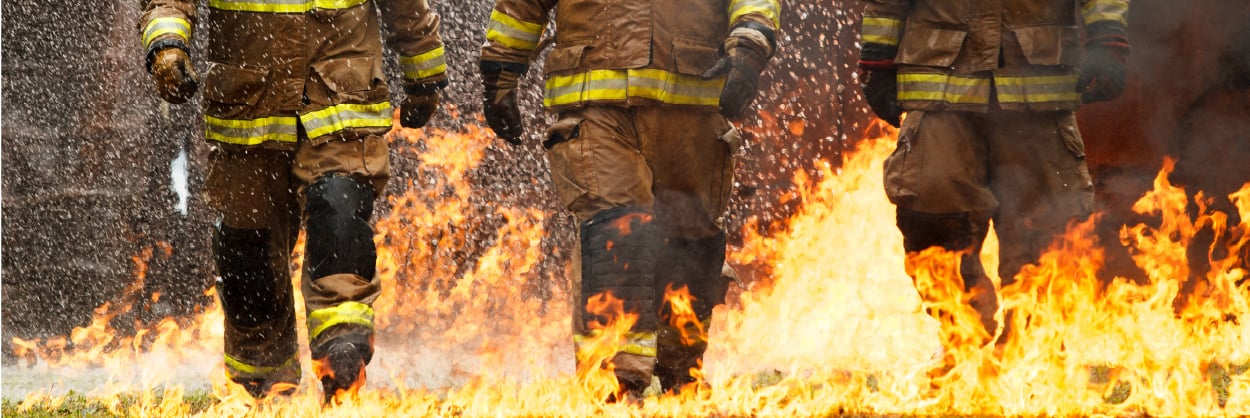
Firefighters train for the unpredictable.
Rotating instructors, compressed training windows, limited facilities, aging props and operational demands make it difficult to deliver consistent training. What gets practiced often depends less on a standardized plan and more on what’s available that day.
This leads to large variables in training. And variability makes readiness hard to measure.
To build measurable readiness, departments need a model that works within short windows, supports instructor consistency and validates performance in a deliberate way.
Firefighters train for the unpredictable. The more realistic a training environment comes to real-world complexity, the better they can develop situational awareness, decision-making, communication, and tactical execution under pressure. Yet many departments face the same challenges in creating realistic training consistently.
When facilities are limited, layouts remain static, or training environments cannot easily adapt to different scenarios, firefighters may become familiar with the structure itself rather than the conditions and decisions the training is meant to reinforce. As training expectations continue to evolve, departments are placing greater emphasis on environments that support varied, repeatable, and more operationally realistic scenarios.
Why Training Environment Realism Matters
Training quality is heavily influenced by the environment in which skills are practiced.
Classroom instruction and basic drills help establish foundational knowledge, but firefighters also need exposure to:
- Changing layouts
- Limited visibility
- Unfamiliar room configurations
- Evolving fire conditions
- Coordinated crew movement
- Search and rescue challenges
These environmental factors influence how firefighters process information and respond during incidents.
When training environments lack realism or remain overly predictable, firefighters can begin relying on memorization instead of observation and decision-making. This reduces the effectiveness of scenario-based training over time because crews become familiar with the structure rather than adapting to changing conditions.
Realistic environments help shift the focus back to reading the situation, communicating effectively, and applying core skills under pressure.
The Challenges of Static Training Environments
Many traditional training facilities are limited by fixed layouts and narrow scenario flexibility.
While permanent structures provide valuable hands-on training opportunities, they can become restrictive when instructors have limited ability to vary:
- Room configurations
- Fire locations
- Search conditions
- Access points
- Ventilation conditions
- Scenario progression
As firefighters repeat the same layouts multiple times, predictability increases. Crews may begin anticipating what comes next rather than reacting naturally to conditions within the environment.
This can create gaps between training performance and real-world incident response, where environments are unfamiliar and conditions change rapidly.
Departments may still be training frequently, but the realism and variability necessary to challenge decision-making can begin to diminish.
Supporting Varied Scenario-Based Training
More realistic training scenarios require environments that can adapt to different objectives and conditions. Dedicated fire training structures help support this by allowing instructors to:
- Modify layouts between sessions
- Introduce changing environmental conditions
- Run multiple types of scenarios within the same structure
- Adjust complexity based on skill level
- Reinforce both individual and team-based response skills
This flexibility allows departments to train for a broader range of operational situations without needing entirely different facilities for each objective.
Firefighters can practice:
- Fire attack
- Hose line advancement
- Search and rescue
- Vent-Enter-Isolate-Search (V.E.I.S.)
- Reading smoke conditions
- Crew coordination
- Transitional attack techniques
Because these scenarios can be adjusted and repeated within the same environment, departments can expose crews to more variation while still reinforcing core fundamentals.
How Dedicated Structures Improve Situational Awareness
Situational awareness develops through repeated exposure to changing environments.
Firefighters must learn how to:
- Interpret smoke conditions
- Navigate unfamiliar layouts
- Identify hazards quickly
- Coordinate movement with crews
- Adjust tactics as conditions evolve
These skills are difficult to reinforce in environments that remain static or overly controlled.
Dedicated training structures create opportunities for instructors to introduce complexity gradually. Scenarios can evolve, allowing firefighters to build confidence while continuing to encounter new variables that require active decision-making.
This helps training feel less procedural and more operationally realistic.
Instead of simply completing a known drill, firefighters must continuously assess the environment around them and adapt their response accordingly.
Improving Long-Term Training Variety
Training variety is important for maintaining engagement and preventing scenario familiarity.
When firefighters encounter the same layouts repeatedly, the focus can shift away from the actual skills being reinforced. Departments need environments that support continued variation without requiring constant facility redesign or large-scale infrastructure changes.
Dedicated fire training structures support long-term variety through configurable layouts and adaptable scenario design.
This allows instructors to:
- Reposition obstacles and walls
- Vary fire locations
- Introduce different visibility conditions
- Adjust ventilation and flow paths
- Create changing rescue or suppression objectives
The result is a training environment that continues to challenge crews over time rather than becoming predictable. This is especially valuable for departments balancing recruit training, advanced company training, and ongoing skill reinforcement within the same facility.
Supporting Consistent Multi-Company Training
Realistic training is not limited to individual skill development. It also plays a major role in how crews operate together. Dedicated training structures help departments run more coordinated multi-company scenarios that reinforce:
- Communication
- Accountability
- Tactical coordination
- Command decision-making
- Crew movement under pressure
Because structures support repeated scenario resets and changing conditions, instructors can evaluate how teams respond across multiple evolutions while maintaining consistency in the training objectives.
This creates opportunities to improve both technical execution and operational coordination at the same time.
Balancing Realism with Repeatability and Safety
Departments need training environments that are realistic enough to challenge firefighters while still remaining controlled, repeatable, and safe to operate regularly.
Dedicated training structures help balance these priorities by combining realistic environmental conditions with integrated safety systems and configurable controls.
This allows instructors to:
- Repeat scenarios consistently
- Adjust conditions based on training goals
- Increase complexity gradually
- Maintain oversight throughout the exercise
The ability to reset and rerun scenarios efficiently also supports more frequent repetitions, helping firefighters reinforce skills without requiring extensive downtime between sessions.
Building Effective Long-Term Training Programs
As training expectations continue to grow, departments need environments that support both immediate training objectives and long-term program development.
Dedicated fire training structures provide the flexibility to:
- Adapt scenarios over time
- Support multiple skill levels
- Reinforce varied operational conditions
- Maintain training consistency across crews
- Increase realism without sacrificing repeatability
This helps organizations build training programs that evolve alongside operational demands rather than being constrained by fixed environments or repetitive layouts.
The goal is not simply to create more training opportunities. It is to create environments that better prepare firefighters for the unpredictability of real incidents.
Frequently Asked Questions
Why are realistic training environments important for firefighters?
Realistic environments help firefighters develop situational awareness, decision-making, communication, and tactical execution under conditions that more closely reflect real incidents.
How do dedicated fire training structures improve training variety?
Dedicated structures support configurable layouts, changing conditions, and multiple scenario types, allowing instructors to vary training objectives without redesigning the entire facility.
What types of training can be conducted in dedicated fire training structures?
Departments can conduct fire attack, search and rescue, hose line advancement, smoke reading, V.E.I.S., crew coordination, and other operational training scenarios.
How do training structures help prevent scenario familiarity?
Configurable environments allow instructors to change layouts, fire locations, and objectives between sessions so firefighters focus on adapting to conditions rather than memorizing the structure.
Can dedicated fire training structures support both recruit and advanced training?
Yes. Flexible structures can support a wide range of training objectives and complexity levels, making them useful for both foundational and advanced firefighter training programs.
Related posts


Popular posts

.jpg)