A new wing gets a certificate of occupancy, a ribbon cutting and a patient move schedule planned down to the hour. What it often does not get is a fire response plan that staff have actually practiced before the first patient arrives.
Transition and activation planning is its own discipline in healthcare construction, and it generally begins about two years ahead of day one. Life safety training sits on the standard list of what staff need before a new space opens, alongside new clinical competencies, equipment training, workflow exercises and general orientation. It is also the item most likely to get compressed, because it competes with everything else in the final 90 days.
What Needs to Be in Place Before the Doors Open
The compliance clock starts at occupancy. In healthcare and ambulatory healthcare occupancies, fire drills are required once per shift per quarter, so a building that opens in the second week of a quarter owes drills on every shift within weeks rather than months. A facility still working through orientation backlogs feels that immediately.
Before opening, a new building or wing needs several things settled:
- A fire response plan written for the building’s compartmentation and egress, rather than inherited from the existing facility
- Staff trained on that plan, by shift, with participation documented as it happens
- Fire extinguisher education meeting OSHA 29 CFR 1910.157(g) for everyone assigned to the new space
- A drill schedule that begins in the quarter the space opens, not the quarter after
- Interim Life Safety Measures documentation covering the construction period, scored under PE.03.02.01 for hospitals and critical access hospitals
That last item runs through the entire project rather than sitting at the end of it. NFPA 241 governs fire safety during construction, alteration and demolition operations, and expects a fire prevention plan prepared and maintained by qualified personnel. During construction, evacuation and relocation procedures and the drills that exercise them frequently have to be modified, then updated again once the work is finished. The plan written at the start of a two-year project is rarely the plan you open with.
Training Staff for a Layout They Have Never Worked In
Defend-in-place asks staff to move patients horizontally into an adjacent smoke compartment instead of out of the building. That instruction only works if a person knows where the smoke barrier doors are, which direction is the shortest route, and what waits on the other side.
Experienced staff is at a particular disadvantage here, which runs against intuition. A nurse with 12 years in the old tower has automatic responses tied to a floor plan that no longer applies, and under stress that old map is what surfaces first. New hires have nothing to unlearn.
The empty building is the opportunity. Between substantial completion and the patient move, there is a window where the space is finished, systems are commissioned and no patients are present. Scenarios that would be impossible on an occupied unit are routine inside that window, and it does not come back.
Smoke generators make the window count. The SG1000™ and SG4000™ produce residue-free training smoke, so staff can navigate an unfamiliar corridor in low visibility without leaving anything behind for environmental services to deal with before opening. SmartDummy™ Rescue manikins let staff rehearse relocating patients, through the real doors, across the real distance against real weight.
Running Training Across Multiple New Units
A wing expansion might involve two or three units. A replacement hospital involves dozens. The constraint is identical either way, since training has to reach every unit and every shift inside a fixed window without pulling staff off-site.
Setup time decides whether that is possible. Anything requiring an outdoor burn site or a vendor mobilization will run once, centrally, for whoever manages to attend. Tools that set up in minutes can rotate floor by floor and catch nights and weekends on the way through.
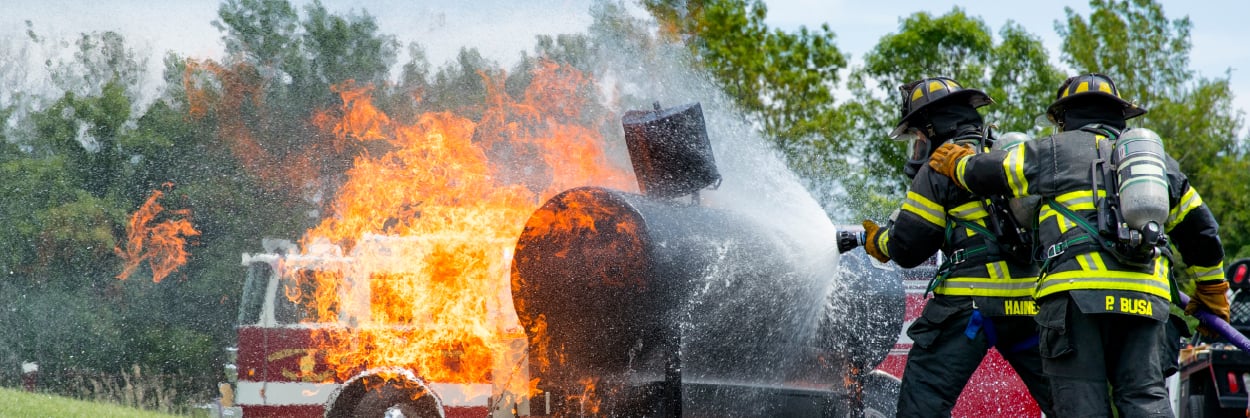
The BullsEye™ Digital Fire Extinguisher Training System meets that need. It uses laser-driven extinguishers and LED flames to mimic a real fire, and the flames only go out when a trainee applies correct PASS (Pull, Aim, Squeeze, Sweep) technique. It runs indoors with no discharge and no cleanup, and it resets in seconds.
Equipment That Carries Over After Opening Day
Opening day is a deadline, not a finish line. Every quarter after it, the new building generates its own drill and training obligations on every shift, permanently.
That reframes the purchasing question. Equipment bought to clear a single deadline is an expense. Equipment that carries the recurring obligation is infrastructure, and it serves the buildings the organization already operates at the same time.
Health systems with in-house training programs, or those co-located with a fire department, often take this further. TrainingReady™ Units are container-based, modular training environments built around moveable walls and interchangeable props, so one unit supports live fire, confined space and search scenarios instead of a single fixed evolution.
Budgeting Training Into the Construction Project
Fire training equipment falls into a gap. It is not a building system, so it does not belong to the construction budget. It is capital, so it does not sit comfortably in an operating budget either. The predictable result is that someone in safety raises it late, after the money is allocated.
The transition and activation budget is where it belongs. That budget gets developed during the transition planning phase, roughly two years before day one, alongside the orientation and training plan, equipment procurement, and the regulatory plan. Life safety training is already a recognized component of staff readiness for a new facility, so naming it as a line item at that stage is far easier than finding it later.
Two arguments tend to land with a project team. The equipment gets used before opening, during the readiness window everyone is already anxious about. And it does not stop working on day two.
Frequently Asked Questions
What fire and life-safety training needs to be in place before a new wing opens?
A fire response plan specific to the new building, staff trained on it by shift with documented participation, extinguisher education meeting OSHA 1910.157(g), a drill schedule starting in the quarter the space opens, and Interim Life Safety Measures documentation covering the construction period.
How should training account for unfamiliar layouts and evacuation routes?
Train in the actual space before patients arrive. Defend-in-place depends on knowing smoke compartment boundaries and horizontal relocation routes, and staff coming from an older building carry habits tied to the wrong floor plan. The period between substantial completion and the patient move is the only chance to rehearse without patients present.
How do facilities train staff across multiple new units efficiently?
Use equipment that sets up in minutes and works indoors, then rotate it unit by unit and shift by shift. Central sessions requiring an outdoor site tend to reach only the staff who can attend, which leaves nights and weekends short.
What equipment supports ongoing training once the facility is operational?
The same tools used before opening. Quarterly per-shift drill obligations continue for the life of the building, so digital fire training systems, smoke generators and rescue manikins keep earning their cost. Organizations expecting further expansion often add modular units or a permanent training structure.
How can training be budgeted as part of a construction or expansion project?
Place it in the transition and activation budget rather than the construction or operating budget. That budget is built roughly two years before opening and already covers orientation, training and regulatory readiness, which is where fire and life safety training belongs.
Related posts
Popular posts

.jpg)