
Customize your experience: Viewing All Products Viewing Products   View All Products View Products Search
   Login  

Contact Us

NFPA 1851

Feature

NFPA 1851 establishes criteria for setting up a program to reduce potential safety and health risks related to poorly maintained, contaminated, or damaged protective ensembles, and ensemble elements manufactured to NFPA 1971.

NFPA 1850

REQUIREMENTS FOR PPE CLEANING & CARE

National Fire Protection Association (NFPA) 1850 is the new, unified standard for managing the entire lifecycle of firefighter PPE. Instead of juggling multiple standards, fire departments and service providers now follow one document for selecting, caring for and maintaining turnout gear.

The consolidated NFPA 1850 standard makes it easier for departments to stay compliant and keep firefighters protected. Despite the name change, the core principles of PPE cleaning and maintenance remain the same:

    • Protect firefighters from contamination
    • Maintain gear to meet uniform standards
    • Document all cleanings, inspections and repairs
    • Ensure compromised gear is removed from service

How to Comply with NFPA 1850

Fire departments must develop written standard operating procedures that describe the program and define the roles and responsibilities of the organization and its members. This includes criteria you need to follow to reduce potential safety and health risks related to poorly maintained, contaminated or damaged gear.

Departments with limited staffing or expertise in PPE cleaning can rely on an Independent Service Provider (ISP) for assistance. The NFPA describes an ISP as an independent third-party that performs advanced cleaning, inspection and repair services for an organization. A “verified ISP” is defined as one that has been certified by a third-party organization to conduct advanced inspection, cleaning and repair services.

To comply with NFPA 1850, fire departments must use a verified ISP when outsourcing gear maintenance. An ISP can also support fire departments in managing their care and maintenance programs and maintaining the necessary records for standard compliance.

Topics Covered in NFPA 1850

The new standard addresses several areas of PPE maintenance and care:

    • Selection
    • Cleaning
    • Inspection
    • Repair
    • Storage
    • Retirement
    • Documentation and records


Cleaning and maintaining PPE protects firefighters from a variety of contaminants and occupational dangers. By following the procedures outlined in NFPA 1850, fire departments and service provides can keep gear clean, safe and ready for action.

Selection

Prior to starting the selection process perform a risk assessment

  • Facilitates comparative evaluation
  • Ensures PPE is suitable for the hazards that are most likely to be encountered by your department

Before purchasing, make sure all ensemble elements properly interface to avoid possible injury or death
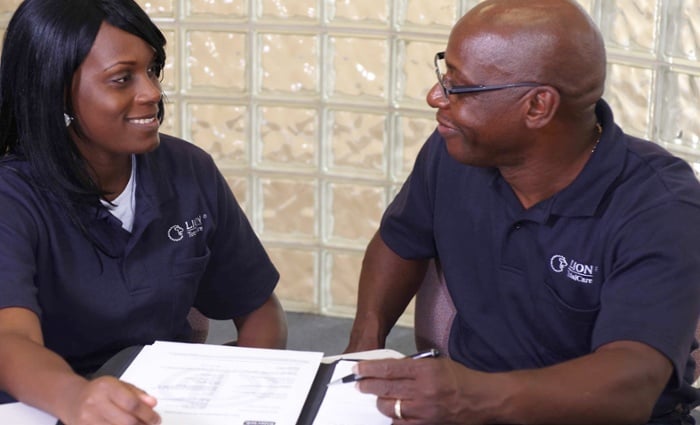
Web Version TotalCare 2

Cleaning

There are various cleaning methods depending on the type of contamination. These range from preliminary exposure reduction (PER) conducted on scene to advanced cleaning and sanitization using an extractor, or specialized equipment like CO2 cleaning for hazardous materials exposure. Regardless of the cleaning method, it's crucial for reducing health and safety risks to firefighters and maintaining the performance of PPE. Contaminants can also negatively affect the properties and performance of the gear. Advanced cleaning is performed by the element manufacturer, a manufacturer trained organization, a verified organization, or a verified ISP.
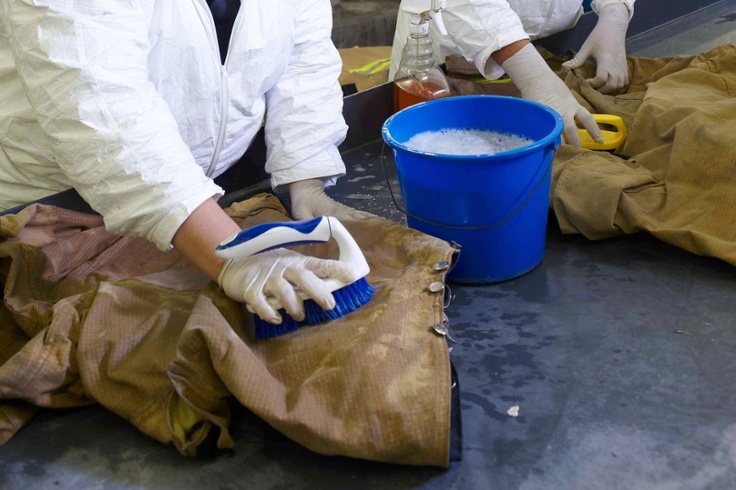
LION NFPA Cleaning

Inspection

For advance inspection, all separable layers, including the moisture barrier, of the garments shall be individually inspected for:

  • Soiling, contamination and physical damage to all layers
  • Loss of moisture barrier integrity
  • Evaluation of fit and coat/trouser overlap
  • Loss of seam integrity, and material integrity
  • Loss of wristlet elasticity, stretching, runs, cuts, or burn holes
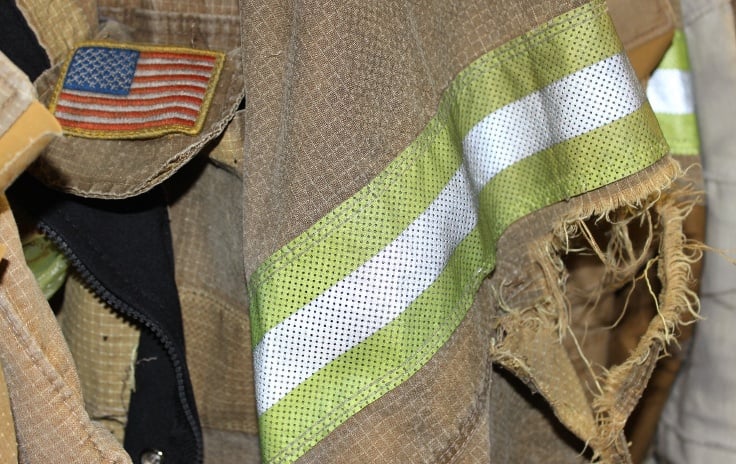
  • Reflective trim and label integrity
  • Closure system functionality
  • Liner attachment systems

LION Gear

Repair

All repairs shall be performed by the original manufacturer, a verified ISP who has received training, or a member of the organization who has received training.
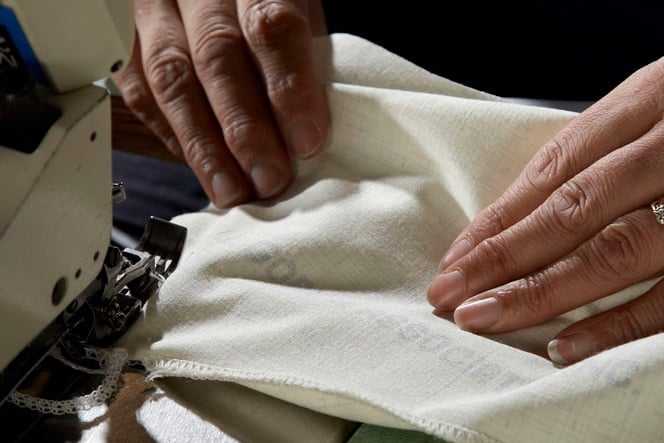
Step 6: Basic Repair

Storage

  • Clean and dry before storage
  • Coats and pants should be hung to limit the damage caused by creasing, and shall not be folded
  • Storage areas should be clean, dry, and well ventilated
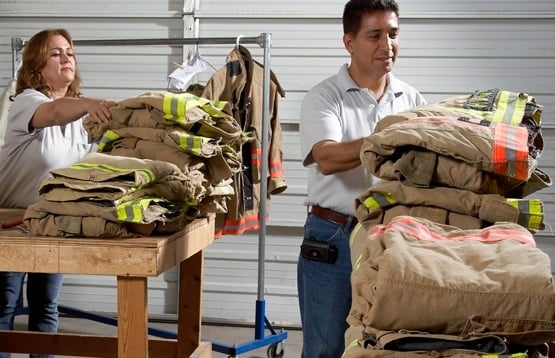
lion-fire-tech.jpg

Retirement

  • Structural and proximity fire fighting ensembles and ensemble elements shall be retired no more than 10 years from the date of manufacturing
  • In all cases, the radiant reflective outer shell shall be replaced at a max of 5 years
  • Shall be retired if:
    • Worn or damaged to beyond reasonable repair
    • Not compliant to NFPA standards when manufactured
    • Contaminated, defective, or damaged

LION NPFA Gear

RECORDS

  • Provides documentation on the steps taken by the organization to ensure PPE in service continues to provide sufficient protection
  • Provides detailed information by individual if an injury or LODD occurs
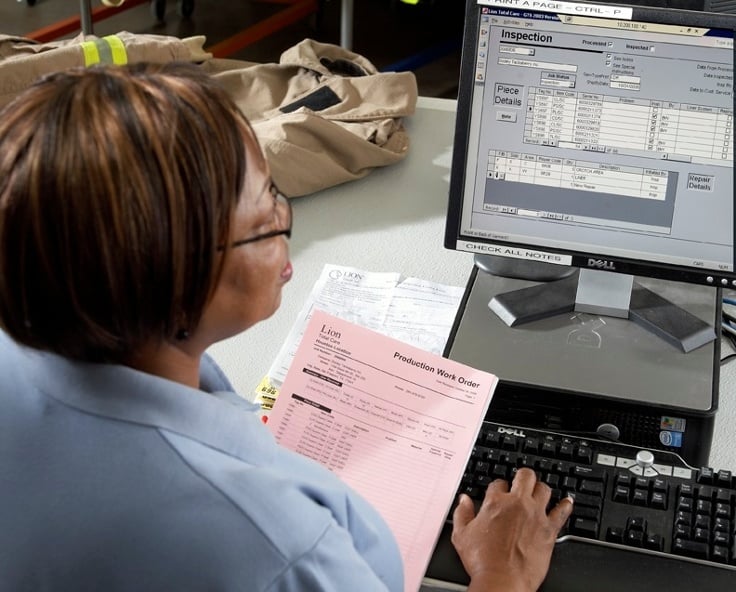
LION inspection

Download Our Full Product Catelog

Download flyer
Offer Title

FREQUENTLY ASKED QUESTIONS

The National Fire Protection Association (NFPA) 1850 standard lays out requirements for selecting, caring for and maintaining firefighting personal protective equipment (PPE). It provides firefighters and service providers with a single source of information to reduce health and safety risks resulting from improper maintenance, contamination or damage.

NFPA 1850 applies to any organization responsible for selecting, cleaning, inspecting, repairing, storing or retiring firefighter PPE.

A verified Independent Service Provider (ISP) is a certified third‑party organization that performs advanced cleaning, inspection, repair and documentation for firefighter PPE.

NFPA 1851 became NFPA 1850 because the fire service needed one unified standard for managing the full lifecycle of firefighter PPE and SCBA. The previous approach — separate documents for turnout gear and respiratory protection — created gaps, inconsistencies and duplicated guidance. NFPA 1850 consolidates those standards into a single framework that reflects best practices and strengthens firefighter protection.

NFPA 1850 covers the entire lifecycle of structural firefighting PPE — from the moment gear is selected to the moment it’s retired. It unifies all PPE and respiratory protection guidance into one standard so departments can maintain consistent care.

LION Fire Academy provides fire department members with online training on PPE maintenance, cleaning, inspection and repair. Visit lionprotects.com/fireacademy for more information on our NFPA 1850 training courses.

Login

Dealers

LION Employees